

A multi-vehicle or multi-car crash in Las Vegas is rarely a simple case. Three or more vehicles, multiple at-fault drivers, layered insurance policies, and insurers actively shifting blame between each other turn what would otherwise be a straightforward injury claim into something far more complex. According to National Highway Traffic Safety Administration data on traffic safety, pileup and chain-reaction crashes account for a meaningful share of serious-injury collisions on high-traffic corridors. When the dust settles, injured victims often face two, three, or more insurance companies, each trying to minimize their driver’s share of responsibility.
At Bromson Law, we represent injured drivers and passengers across Clark County. A multi vehicle accident lawyer in Las Vegas approaches these cases differently because they involve fault apportionment, accident reconstruction, and Nevada’s several liability rules. Early action often shapes how the claim unfolds. We approach these claims with the same measured, fact-driven process we use across our broader Las Vegas car accident lawyer practice, focused on negligence, duty of care, and accountability under Nevada law. Call (702) 213-0100 to schedule a consultation.
How Multi-Vehicle Accident Claims Work Under Nevada Law
Multi-vehicle crashes differ from typical two-car claims because liability is rarely concentrated in a single driver. Nevada law has specific rules for apportioning fault across multiple defendants, and those rules shape how the claim is built from day one.
Multiple At-Fault Drivers, Multiple Claims
Each at-fault driver in a multi-vehicle crash typically has their own liability policy. Recovery often requires separate claims against each at-fault driver’s insurer, sometimes coordinated, sometimes sequential. Insurance companies for different drivers often take conflicting positions on fault, which can complicate settlement timing.
Nevada’s Several Liability Rule
Under NRS 41.141, Nevada generally applies several liability in multi-defendant negligence cases. Each defendant is responsible only for their own percentage of fault. If one driver is 60 percent at fault and another is 20 percent at fault, each pays their share of damages rather than the full amount jointly. This rule makes it especially important to identify every at-fault party and document their contribution to the crash.
Comparative Negligence With Multiple Defendants
The plaintiff’s percentage of fault is compared against the combined fault of all defendants, not each defendant individually. As long as the injured victim is 50 percent or less at fault compared to the combined fault of all the drivers who contributed to the crash, recovery is possible. Recovery is reduced by the assigned percentage of plaintiff fault but not eliminated.
Common Causes of Multi-Vehicle Crashes
Multi-vehicle crashes rarely happen at random. Identifying the underlying driver behavior and conditions is often central to establishing liability across multiple parties.
Chain Reactions From Sudden Braking
The most common pattern: one driver brakes suddenly or is rear-ended, and the impact cascades through following vehicles. Drivers behind who were following too closely have less time to react, which is why multiple drivers often share fault in these cases. Crashes involving commercial trucks tend to be especially severe; our Las Vegas truck accident lawyer page covers those scenarios in detail.
Distracted Driving in Heavy Traffic
According to NHTSA distracted driving research, even brief moments of visual distraction reduce reaction time significantly. In dense traffic, a single distracted driver can trigger a multi-vehicle collision affecting everyone behind them.
Impaired Driving and Reckless Lane Changes
Drivers under the influence often fail to recognize slowing traffic or make abrupt lane changes that force others to brake hard. According to CDC research on impaired driving, alcohol and drugs significantly reduce coordination, judgment, and reaction time, which compounds the risk on busy roads. Multi-vehicle cases sometimes overlap with our drunk driving accident practice when an impaired driver’s actions contribute to a chain reaction.
Weather and Visibility Conditions
Sudden fog, heavy rain, or blowing dust can produce cascading visibility-related crashes where multiple drivers fail to see slowing traffic ahead. These conditions do not automatically shift fault away from drivers; reasonable speed and following distance are required regardless of weather.
Common Injuries in Multi-Vehicle Crashes
Multi-vehicle crashes often produce more severe injuries than single-vehicle crashes because the body absorbs forces from multiple impacts in rapid succession.
Multi-Directional Impact Injuries
Vehicles caught in a pileup may be struck from behind, pushed forward into another vehicle, and sometimes struck from the side. The body absorbs forces from different directions within seconds, which can produce injuries more severe than a single-impact crash of similar speed.
Traumatic Brain Injuries
Sudden head movement and impact during a multi-vehicle crash can cause traumatic brain injury even when the victim does not lose consciousness. Symptoms may develop hours or days after the crash, which is why early medical evaluation matters.
Spinal and Orthopedic Injuries
Herniated discs, vertebral fractures, broken arms or legs, and joint damage are common in multi-impact crashes. These injuries often require imaging, physical therapy, or in severe cases, surgery. Cases involving severe injuries connect to our broader Las Vegas personal injury lawyer practice.
How Liability Is Apportioned in Multi-Vehicle Crashes
The procedural mechanics of multi-vehicle cases often determine recovery. Several Nevada rules shape how these claims unfold.
Mapping Fault Across Multiple Drivers in a Pileup
Multi-vehicle crashes require careful evidence gathering to determine each driver’s percentage of fault. Police reports, traffic camera footage, dashcam video, vehicle damage patterns, and event data recorder information all contribute. Accident reconstruction often becomes necessary in larger pileups. Early evidence preservation shapes how fault is ultimately apportioned.
The Sandwich Vehicle Problem in Chain Reactions
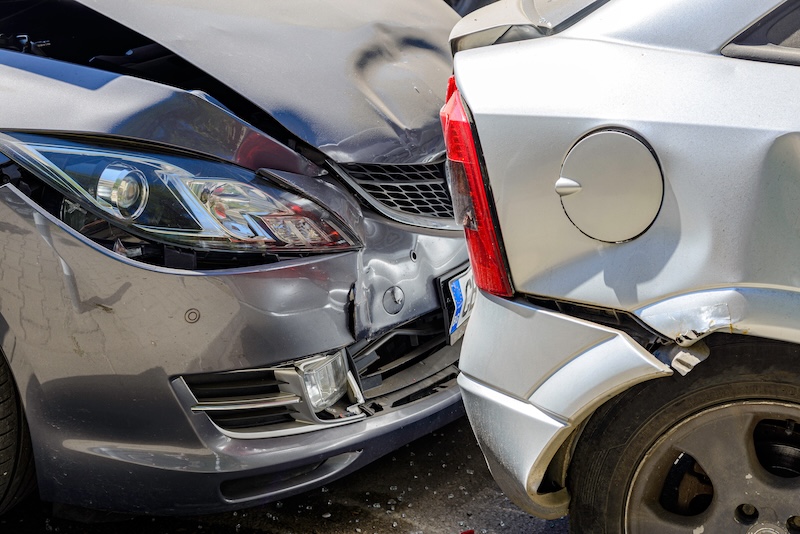
When a middle vehicle is struck from behind and pushed into the vehicle in front, the middle driver is usually not at fault for the forward collision. The force of the rear impact, not the middle driver’s negligence, caused the forward impact. Insurers sometimes try to blur this distinction during settlement discussions, which is why physical evidence and witness statements matter.
Settlement Timing in Multi-Vehicle Cases
Under NRS 41.141, if one defendant settles before trial, the settlement amount is deducted from the final judgment. This sequencing affects negotiation strategy with multiple defendants. Settling too early with one driver, before the full fault picture is clear, can reduce overall recovery if the trial later shows other drivers carried larger shares of responsibility.
Exceptions Where Joint and Several Liability Applies in Multi-Vehicle Cases
Nevada preserves joint and several liability in certain cases, including strict liability, intentional torts, toxic substances, concerted acts of defendants, and product liability claims such as defective vehicle components. When these exceptions apply, a single defendant may be responsible for the full judgment regardless of their percentage of fault.
Working With Bromson Law After a Multi-Vehicle Crash
Erik A. Bromson brings more than 15 years of experience representing injured people across Nevada. Multi-vehicle cases involve evidence sources, liability disputes, and insurance layers that are not part of a typical auto claim. Early action protects the claim because much of the evidence that determines fault apportionment is time-sensitive.
We coordinate communication across multiple insurers and explain Nevada concepts like several liability, comparative negligence, and the two-year statute of limitations under NRS 11.190 in plain language. These cases also overlap with our Las Vegas rear-end accident lawyer practice, since most chain reactions begin with a rear-end impact.
Frequently Asked Questions About Las Vegas Multi-Vehicle Claims
Who Pays for My Injuries in a Multi-Car Accident With Multiple At-Fault Drivers?
Under Nevada’s several liability rule, each at-fault driver’s insurance pays their share. If three drivers share fault at 50, 30, and 20 percent, recovery typically comes through three separate claims against three separate insurers, each paying its driver’s proportion of the damages.
What if the Other Drivers Blame Each Other?
This is a common pattern. Each insurer typically tries to shift blame toward the others to reduce their client’s percentage of fault. Physical evidence such as vehicle damage patterns, event data recorder readings, and traffic camera footage often matters more in multi-vehicle cases than in standard two-car claims because each driver’s version of events may differ.
I Was Hit From Behind and Pushed Into the Car in Front of Me. Am I at Fault for the Forward Collision?
Usually no, but the front driver’s insurer may still pursue your policy first. Reporting the rear impact immediately to police and the front driver’s insurer helps establish the correct sequence of events. Photos showing damage patterns, such as heavy rear damage on your car combined with lighter front damage, often support the position that you were pushed forward by the rear impact rather than rear-ending the front vehicle yourself.
What if One of the At-Fault Drivers Has No Insurance?
Uninsured and underinsured motorist coverage on the victim’s own policy may apply when one or more at-fault drivers lacks adequate insurance. Our uninsured motorist coverage page covers this scenario in detail, including the Nevada-specific rules under NRS 687B.145.
How Long Do I Have to File a Multi-Vehicle Accident Claim in Nevada?
Most personal injury claims in Nevada must be filed within two years of the crash date under NRS 11.190. Multi-vehicle cases often involve more parties and more disputes, which means more investigation time is needed before deadlines run. Acting early protects options.
What Does It Cost to Hire a Multi-Vehicle Accident Lawyer?
Erik A. Bromson handles personal injury claims on a contingency fee basis. There is no upfront cost. Fees are collected only if the case results in a settlement or verdict.
Talk With Bromson Law About Your Multi-Vehicle Accident
A multi-vehicle crash leaves injured people facing pain, multiple insurance companies, and the added complication of fault being disputed between drivers. The decisions made in the first few days often shape how the claim unfolds.
We take time to listen, review what happened, and explain how Nevada’s several liability rules and your insurance options may apply. Evidence fades quickly in multi-vehicle cases, and insurance carriers move fast to shift blame between drivers.
If you or someone you love was injured in a chain reaction or pileup crash, call or text our multi vehicle accident lawyer Las Vegas office at (702) 213-0100 to schedule a consultation.